Candy Santa: A Festive Display Font for Handmade Holiday Products
If you’re designing holiday labels, printable cards, or SVG cut files for mugs and tote bags, you know how much a single font can shape the warmth—and sales—of your seasonal collection. Candy Santa isn’t just another Christmas-themed typeface. It’s a bold, joyful display font built for makers who need charm *and* clarity in equal measure.
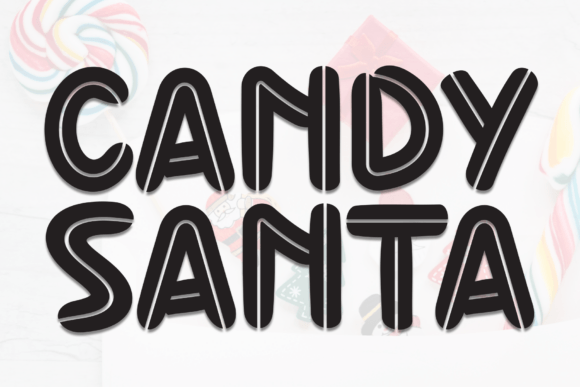
With its rounded, candy-cane-striped letterforms, Candy Santa captures playful nostalgia without tipping into kitsch. The curves are generous but controlled; the stripes are subtle enough to hold up at small sizes yet expressive enough to command attention on a farmhouse-style welcome sign or a boutique gift tag. It’s not a script—it’s a confident, friendly display font that feels handmade, even when it’s digital.
Where Candy Santa Shines in Real Craft Projects
This font thrives where personality meets purpose. Think beyond “Merry Christmas” banners: Candy Santa works beautifully on candle jars (especially soy or beeswax blends with natural packaging), artisanal hot chocolate mix labels, holiday cookie box stickers, and printable planner pages with festive headers. Its strong x-height and open counters mean it cuts cleanly on Cricut and Silhouette machines—even at 0.25” height for tiny jar tags.
For printable product creators, Candy Santa adds instant seasonal appeal to digital downloads: greeting card templates, wall art bundles, wedding welcome boards (yes—even winter weddings love this kind of cheerful contrast), and themed sticker sheets. On physical products like ceramic mugs or cotton tea towels, it prints crisply in screen-printed or heat-transfer applications, especially when used as a focal phrase—not body text.
It’s also a smart choice for boutique packaging: imagine a kraft paper gift bag stamped with “Joy” or “Treats” in Candy Santa, paired with twine and dried orange slices. That kind of cohesive, tactile branding builds recognition across your shop—and customers remember fonts that feel intentional, not generic.
Readability & Practical Use Across Formats
Candy Santa is designed for display use—not long paragraphs. That’s a strength, not a limitation. Use it for headlines, product names (“Peppermint Bark”, “Ginger Snap Co.”), event titles (“Holiday Market 2024”), or short slogans (“Sweet Surprises Inside”). Avoid setting full invitations or multi-line product descriptions in it—your buyers will appreciate the visual rhythm of pairing it with a clean supporting font instead.
On printed cards and stickers, Candy Santa holds contrast well in both light-on-dark and dark-on-light layouts. For laser-cut wood signs or vinyl decals, keep stroke width in mind: the striped elements stay legible down to ~18 pt at 300 dpi, making it viable for 4×6” greeting cards and 2×3” product tags alike. Always preview your mockups at actual size—especially if exporting for print-on-demand services.
Smart Pairings That Elevate Your Designs
Great fonts don’t work alone—and Candy Santa pairs intuitively with several go-to styles in a maker’s toolkit. Try it with:
- A relaxed handwritten font (like a natural ink script) for names or personal messages—e.g., “Merry Christmas from the [Handwritten Name] Family”;
- A crisp sans serif (think Montserrat or Poppins) for supporting text, pricing, or ingredient lists—creating clear hierarchy without visual competition;
- A warm serif (such as Playfair Display or Cormorant Garamond) for elegant contrast on wedding stationery or luxury soap labels.
The key is balance: let Candy Santa carry the festive energy, then anchor it with something grounded and readable. That combination makes your designs feel curated—not cluttered.
What’s Included & What You Should Know Before Buying
Candy Santa is a display font, so check the file package before purchasing. Most quality versions include OTF and TTF formats (essential for Cricut Design Space, Silhouette Studio, and Canva), plus basic OpenType features like standard ligatures and stylistic alternates—handy for swapping out slightly bolder or more rounded characters depending on your layout needs.
While the description mentions candy cane inspiration, it doesn’t include multilingual glyphs beyond basic Latin characters (A–Z, numerals, common punctuation). If your shop serves bilingual holiday markets, verify coverage for accented characters before committing to large-scale label runs.
Commercial Licensing: A Must for Sellers
As a small shop owner or printable creator, you need fonts you can use *without worry*. Candy Santa is licensed for commercial use—that means you can confidently use it in physical products (stickers, mugs, apparel), digital downloads (PDF templates, SVG cut files), client work, and social media graphics. Just double-check the license terms for limitations on unlimited resale (e.g., embedding in editable Canva templates for mass resale) or extended merchandise rights—some vendors require an upgrade for high-volume apparel production.
When your font license covers your business model, you invest in consistency—not just aesthetics. Every time a customer sees “Candy Santa” on your candle label, then your Instagram story, then your holiday newsletter, they’re absorbing your brand voice. That repetition builds trust. And trust sells.
Final Notes for the Hands-On Creator
Candy Santa works best when treated like a signature ingredient—not the whole recipe. Use it intentionally: on one hero element per design, not layered over patterns or busy backgrounds. Test it in grayscale first to ensure contrast holds. And always kern manually around tricky letter combinations (like “AV” or “To”)—those small adjustments make your finished pieces look pro, not rushed.
Whether you're prepping for Etsy’s holiday rush, stocking local boutiques, or launching a new line of printable planners, Candy Santa gives your work that unmistakable festive lift—without sacrificing craft integrity. It’s joyful, usable, and quietly sophisticated. In other words: exactly what your holiday lineup has been missing.